
Pigs & The Planet
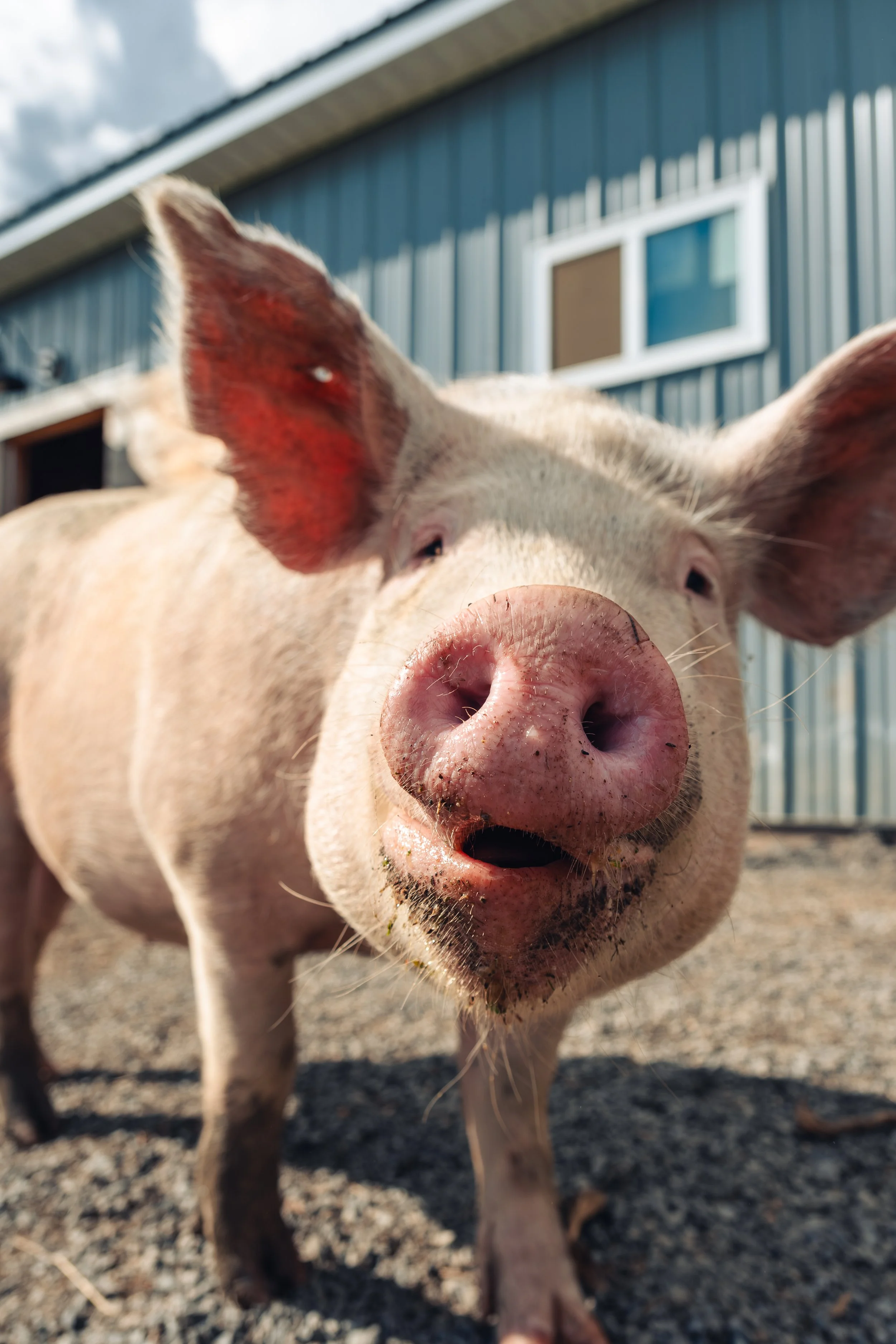
March 1 is National Pig Day!
National Pig Day is celebrated every year on March 1 in the United States as a day to honor the intelligence and charm that pigs possess. At Sweet Farm, National Pig Day is a moment to celebrate the individual pigs in our care and to shine a light on the hidden costs of factory-farmed pork on the planet and human health..
Pigs: Curious, Social, Intelligent
The fifth smartest animal on the planet, pigs are highly social animals who form strong bonds, demonstrate empathy, recognize themselves in mirrors, and use tools -- all qualities that inspired the creation of National Pig Day! Possessing intelligence on the same level as a human toddler, studies have shown that pigs can plan ahead, keep secrets, solve puzzles, an even play video games! Fossil records suggest pig ancestors have been on Earth for tens of millions of years, and humans began domesticating pigs roughly 9,000 years ago. Today, however, most pigs in the U.S. live in concentrated animal feeding operations (CAFOs), often called factory farms. These facilities confine large numbers of animals in crowded, indoor spaces and rely on mechanized feeding, rapid growth, and routine antibiotics to keep production costs low.
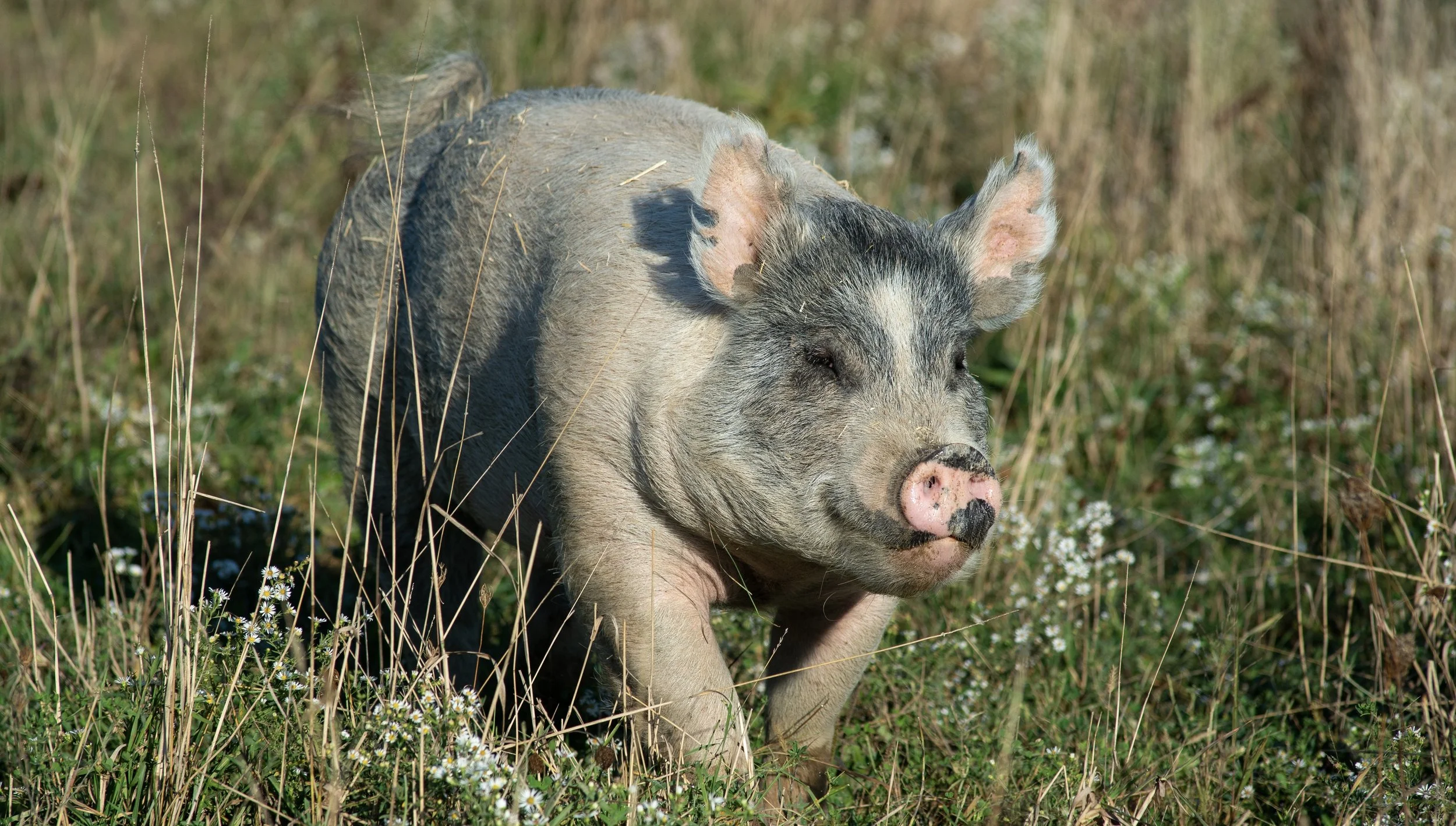
Spuds, living the life all pigs deserve
Environmental Toll: Waste, Water, and Air
This intensive confinement also drives enormous volumes of manure and waste, which becomes an environmental and public health problem far beyond the farm’s fences. A single large pig operation can generate upwards of 1.6 million tons of manure per year - far more waste than nearby land and waterways can safely absorb.
This manure is typically stored in open-air “lagoons” and then sprayed on fields, releasing ammonia, methane, heavy metals, and other pollutants into the air, soil, and groundwater. Residents in surrounding areas report foul odors, headaches, higher blood pressure, and respiratory ailments linked to airborne particles and gases from pig waste. Because these facilities are often sited near low-income and marginalized communities, the pollution and health burdens of factory pig farming raise serious environmental justice concerns as well.
Human Health: Antibiotics, Disease, and Diet
Factory farms commonly rely on large quantities of antibiotics to prevent disease and promote growth in crowded conditions, which contributes to the rise of antibiotic-resistant bacteria. Research shows that resistant bacteria can pass from animals to workers handling them, survive in meat products, spread via waste used as fertilizer, and move into surrounding ecosystems, increasing the risk of hard-to-treat infections in people.
Beyond infections, high volumes of cheap, factory-farmed meat in the food system can drive overconsumption of animal products, which is recognized as a major risk factor for heart disease and certain cancers. As land and resources are used to grow feed for animals rather than diverse crops for people, both nutrition and food security are compromised.
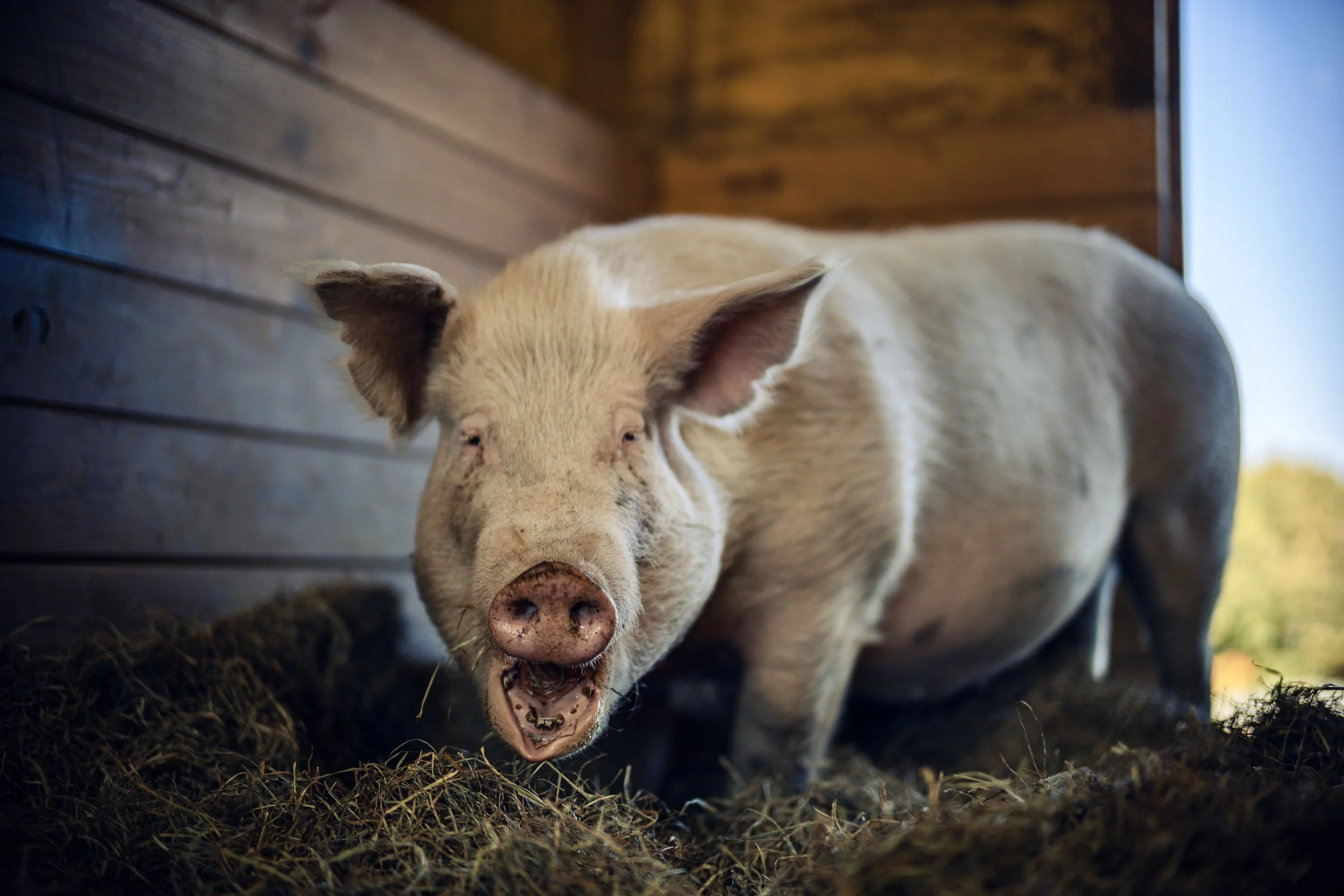
How You Can Honor Pigs This March
You can celebrate National Pig Day all month long by making small, meaningful changes. Here are just a few!
Choose plant-based options over animal-based ones and save lives, water, and emissions.
Support farms and food brands that reject factory farming and invest in higher-welfare, lower-impact practices, like smaller and regenerative farms.
Learn more, and share knowledge with friends and family so more people understand the hidden costs behind cheap pork.
Connect with Sweet Farm to meet rescued pigs, learn their stories, and see firsthand why they deserve protection and respect.
This March, let’s use National Pig Day as an invitation to align our plates, our politics, and our compassion with a future where pigs, people, and the planet all thrive.

SUSTAINABLE HOME SPOTLIGHT: Fig Salami from Hellenic Farms
Hellenic Farms collection of plant-based Fig Salamis, made from premium Greek figs, spices, and dried fruits or nuts are an easy replacement for environmentally detrimental pork salami. These healthy snacks make for the perfect cheese companion on your platter. They are vegan, GMO free, and have no added sugars.