
We built the software we couldn't find. Now it's free for every sanctuary.
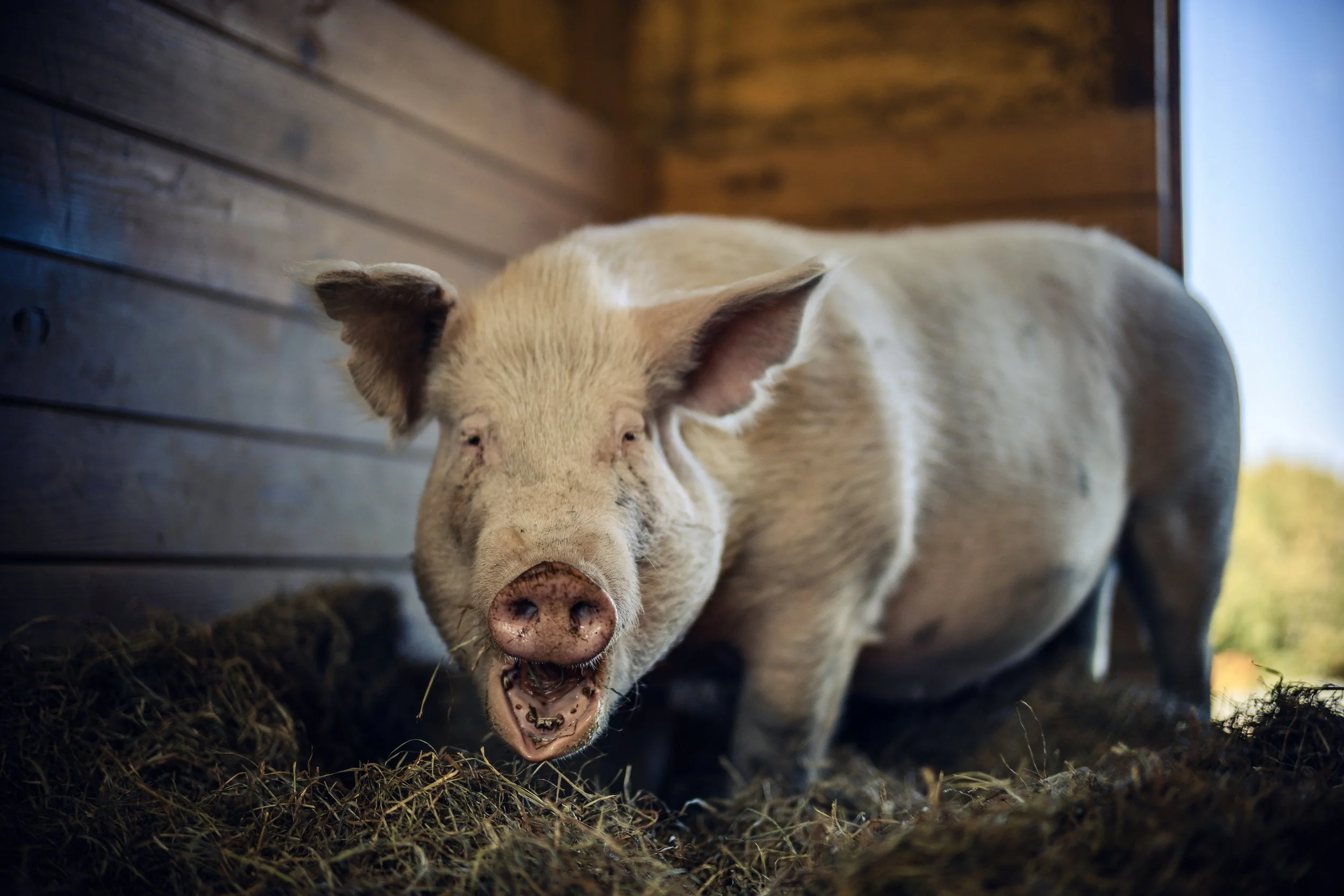
Look how about it excited Dusk is!
Dusk is a 700-pound Yorkshire pig with feet that are malformed due to her breeding. Her care is not a single event — it's a standing appointment with the rest of her life. Hoof trims. Weight checks. Pain management that gets adjusted as she ages. Anti-inflammatories, and the notes about how she responded to the last round of them.
Now multiply that by every animal here. All 150. Then imagine the person holding all of it is a volunteer who comes on Tuesdays, and the record lives in a spreadsheet that three people edit but the owner is someone who hasn’t worked there in years. Or an animal caregiver who rarely has a chance to sit down, having to devote hours each week to entering information into a farming software program that asks what an animal’s “harvest weight” is, and you just have to ignore over and over that the rest of the world looks at the animals you’ve devoted your life to as commodities to be “harvested” and sold.
That was us. And after talking with enough other sanctuaries, we learned it's almost everybody.
Sanctuaries don't have an effort problem. They have an infrastructure problem.
Walk into any sanctuary in the country and you'll find extraordinary people doing extraordinary work with tools that were never built for them. Medical histories in a binder. Volunteer shifts in a group text. Farm software that asks whether cattle are for “meat” or “dairy.” Grant deadlines on a sticky note. Maintenance requests that exist only in somebody's head until a gate fails.
The software that could fix this was built for veterinary clinics or municipal shelters — places where animals arrive, get treated, and leave. Sanctuaries are the opposite. Our animals arrive and stay for 5-15 years. We need records that hold a decade and a half of chronic care, not just a discharge summary.
The products that came close cost more per month than most sanctuaries spend on hay. So sanctuaries do what sanctuaries always do: they make it work, on their own time, for free, until something falls through a crack. And when something falls through a crack at a sanctuary, an animal pays for it.
So we built it.
So we're announcing the Sanctuary Toolkit — a single platform that runs the operational side of an animal nonprofit. It's what we built to run Sweet Farm, and it's now available to any other organization that wants it.
Here's what's in it:
Animal Health Records — medical histories, medications, treatments, feeding, and vet visits, built for residents who stay for years rather than days.
Volunteer Management — applications, shift scheduling, and automatic reminders, so coordinating your volunteers stops being somebody's second job.
Sign-In Kiosk — self-service check-in for visitors and volunteers. Your front desk, minus the clipboard.
Facilities & Vehicles — work orders and maintenance schedules, so the broken gate gets logged instead of remembered.
Grants & Development — grant research plus a fundraising calendar, in the same place as everything else.
Knowledge Base — an internal wiki with search and revision history. The answer to "how do we do this again?" lives somewhere other than one person's memory.
Sanctuary Connect — a network for coordinating directly with other organizations.
That last one matters more than it might sound. When a sanctuary in the next state needs to place an animal, or wants to know what another organization actually paid for a barn roof, the answer usually travels by phone call between two people who happen to know each other, or a social media group that is noisy and chaotic. Sanctuary Connect is an attempt to make professional and direct communication the default rather than the exception.
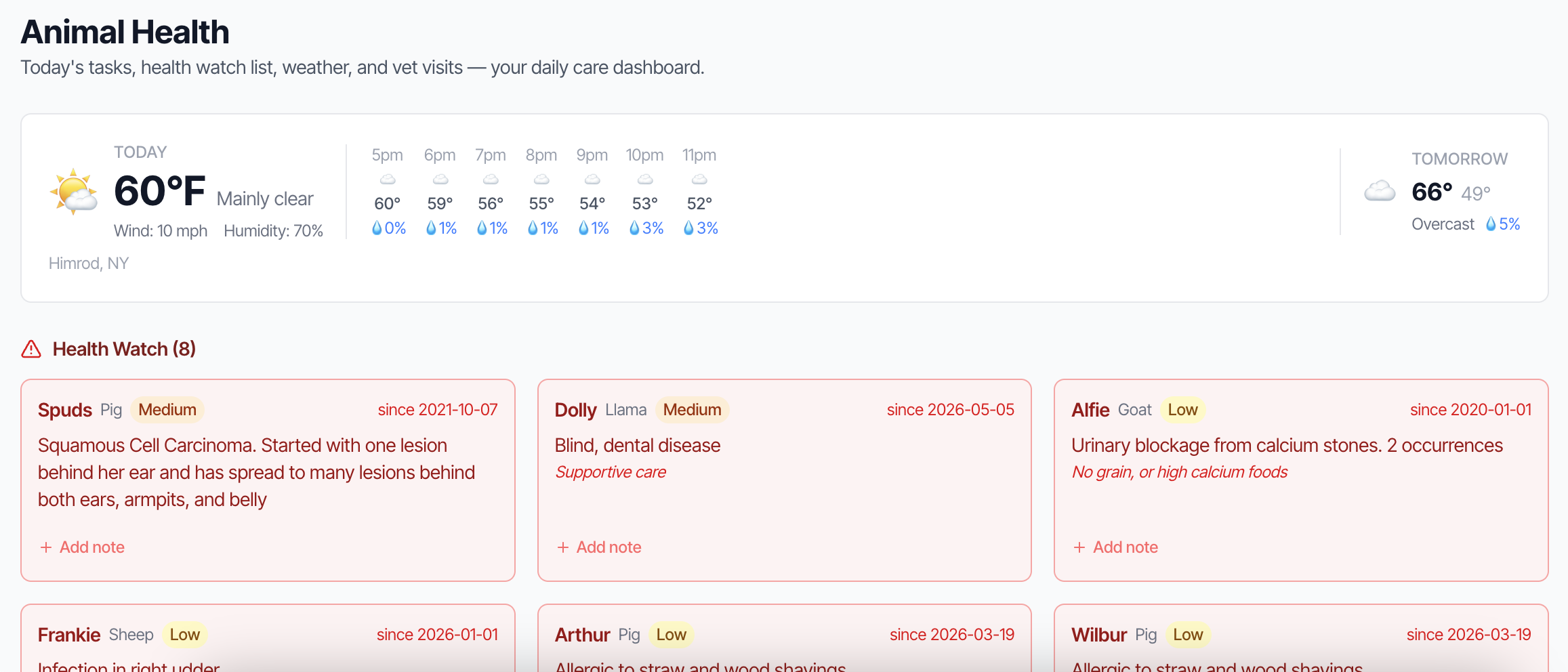
Everything you need to keep things moving and track everyone’s health.
It's free. Genuinely free.
No per-user fees. No trial period that turns into a bill. No upsells, no premium tier, no "contact sales." Free.
We want to be clear about why, because "free software from a nonprofit" usually has a catch somewhere. There isn't one. We built this for ourselves and the cost of letting other sanctuaries use it is close to zero. Charging for it would mean the sanctuaries who need it most — the ones running on a five-figure budget and a lot of heart — would be the ones who couldn't have it. That's backwards.
What this could mean
Every hour a sanctuary manager spends reconstructing a medication history is an hour not spent with animals. Every grant deadline that slips past is money that doesn't arrive. Every volunteer who drifts away because nobody confirmed their shift is capacity lost.
We can't fix funding for the sanctuary movement. But we can take one recurring, solvable, expensive problem off the table for every organization that wants it gone — and we can do it once, rather than three hundred sanctuaries each solving it alone, badly, in a spreadsheet.
Who can use it
Any nonprofit animal sanctuary, rescue, or shelter. Farm sanctuaries, companion animal rescues, wildlife organizations, municipal-adjacent shelters — if you're a nonprofit caring for animals, you qualify. You do not have to be a farm sanctuary, and you do not have to know us.
Organizations request access at sanctuarytoolkit.org. We review requests to keep the community intact, then send setup instructions by email.
How you can help
If you're reading this as a Sweet Farm supporter: you already helped. This was built with the same support that feeds the animals here, and it's now doing work at organizations we'll never visit.
The most useful thing you can do now is send it to someone. If you volunteer at a rescue, sit on a shelter board, foster, or follow a sanctuary two states away — forward them this post. The sanctuaries who need this most are exactly the ones too busy to go looking for it.
If you want to support the work we do for our animals and for all the animals that have found their way to safety, please donate to help us continue this work.
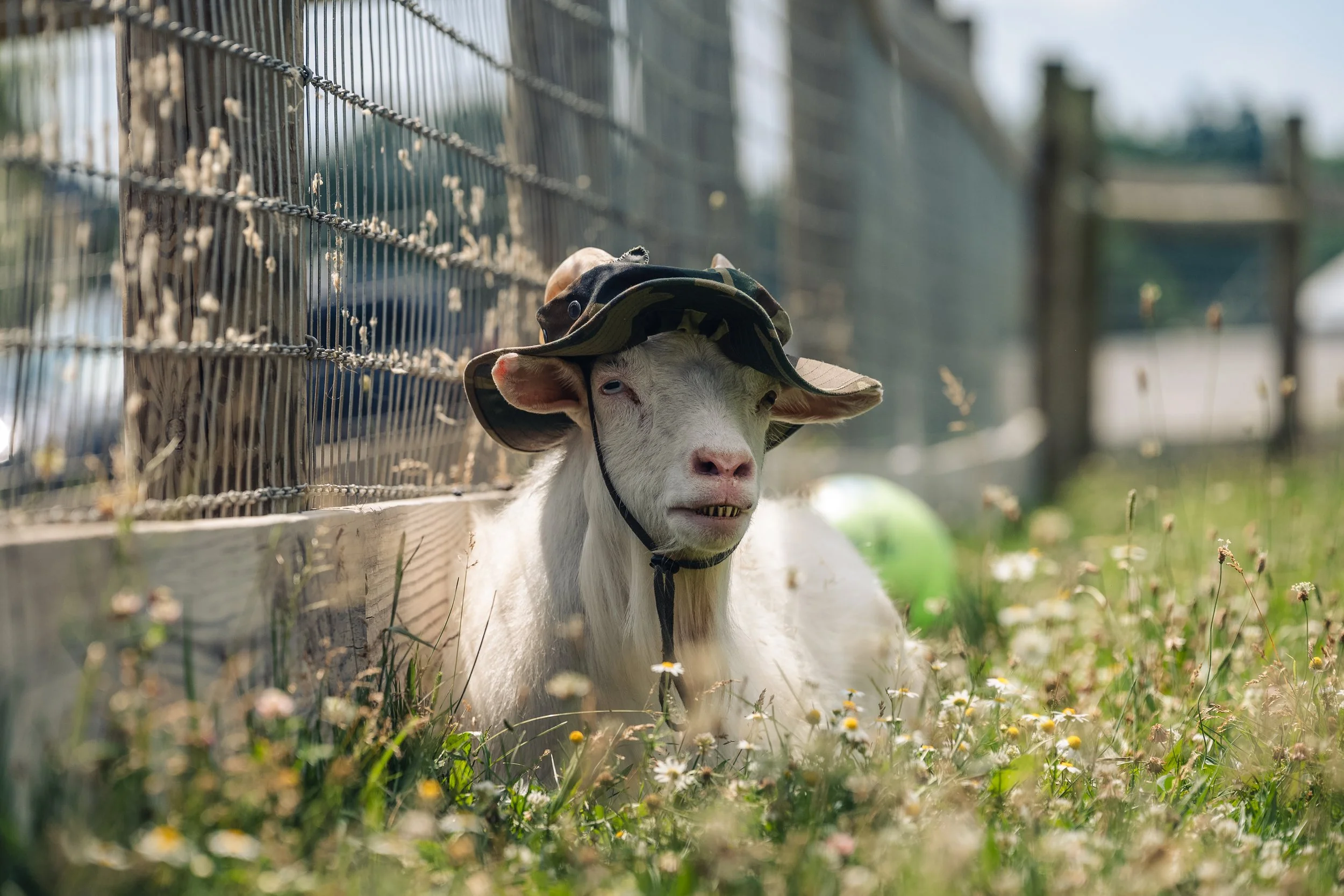
Major Levi at his post